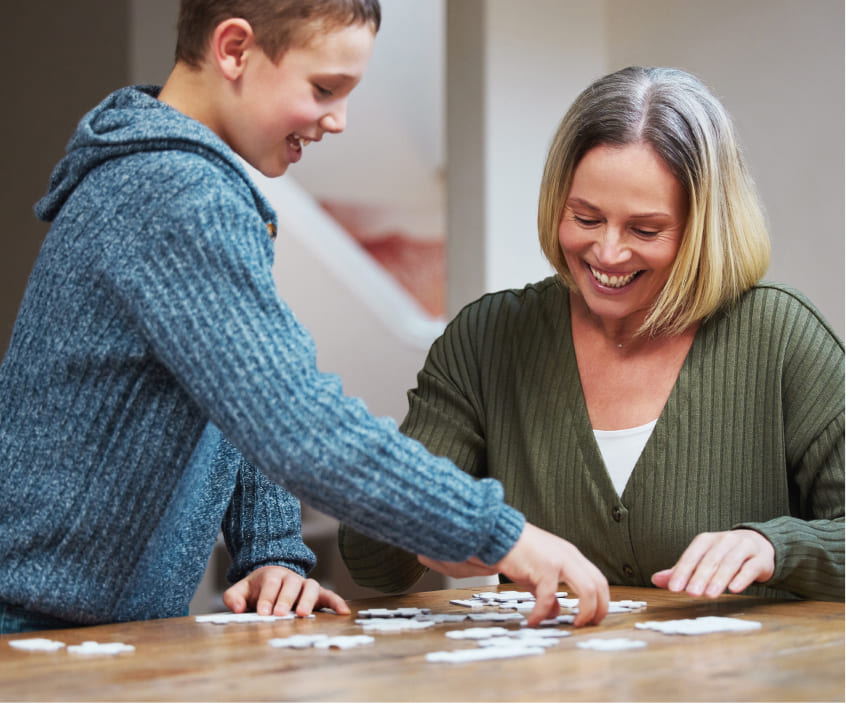
You finished it, and it is too good to break apart. Gluing a puzzle takes about 20 minutes of work plus drying time, and it is hard to get wrong if you follow a few simple steps.
What you need
- Puzzle glue (a clear-drying glue made for jigsaw puzzles)
- Wax paper or parchment paper, enough to go under the whole puzzle
- A rolling pin
- A spreader: a plastic card, a piece of stiff cardboard, or a foam brush
- A flat surface where the puzzle can sit undisturbed for a few hours
Step by step
Protect the table. Slide sheets of wax paper or parchment under the finished puzzle, overlapping them so no table shows. Glue seeps through the gaps between pieces, and without this step your puzzle becomes part of the furniture. Do not use newspaper. It sticks and the ink can transfer.
Flatten it. Roll a rolling pin gently over the whole puzzle to press every piece down and close the gaps.
Dust it. Wipe the surface with a dry cloth to remove dust and loose cardboard fibers.
Apply the glue to the front. Pour a small amount in the center and spread it outward in a thin, even layer, right to the edges. Work the glue into the seams. Thin is the rule: you can always add a second coat, but you cannot take a thick one off.
Let it dry. Most puzzle glues are dry to the touch in 2 to 4 hours. Follow the label on your bottle. It will look white or cloudy while wet and dry clear.
Second coat, if needed. If any pieces still feel loose, add another thin coat and let it dry again.
Peel and trim. Lift the puzzle off the paper. Peel away any paper that stuck to the back and trim dried glue from the edges with scissors.
Should you glue the back too?
A coat on the back adds strength, which helps with large puzzles (1,500 pieces and up) or if you plan to hang the puzzle without a frame. Let the front dry completely first, flip the puzzle carefully onto clean paper, and repeat.
Getting it ready to hang
For framing: measure the finished puzzle itself, not the size printed on the box. Finished sizes vary by a fraction of an inch. A frame without glass shows off the texture. A frame with glass or acrylic protects it from dust.
For hanging without a frame: mount the puzzle on foam board cut to size, using spray adhesive or a thin layer of glue, and attach adhesive hanging strips to the board.
Mistakes to avoid
- Too much glue. A thick coat makes the puzzle curl as it dries. If yours curls, place it under a few heavy books once it is fully dry.
- Skipping the paper underneath. See step 1.
- Moving it too soon. Leave it flat until fully dry.
- Gluing in direct sunlight or high humidity. Both cause uneven drying.
- Framing before it is fully cured. Give it a full day before it goes behind glass.
Not every puzzle needs to be saved
Glue the ones that mean something: the one the whole family did over the holidays, or the image you would hang anyway. Pass the others on to a friend or donate to your local library.
Puzzle Monthly includes a bottle of puzzle glue with 6 and 12-month plans, so you are ready when a keeper comes along. Compare plans, or read how long a 1,000 piece puzzle takes before you start your next one.
A new puzzle at your door every month
Kids, Classic, and Pro+ plans from $27.99 a box, with free shipping in the contiguous US.